Metal stamping from China: progressive dies and small runs
Our Ninghai facility operates precision metal stamping presses producing custom brackets, spring contacts, electrical terminals, and hardware components from sheet coil. Offering progressive dies and single step tooling under the same roof as our plastic injection molding operations allows European purchasers to source both stamped metal components and insert-molded assemblies from a single accountable manufacturer.
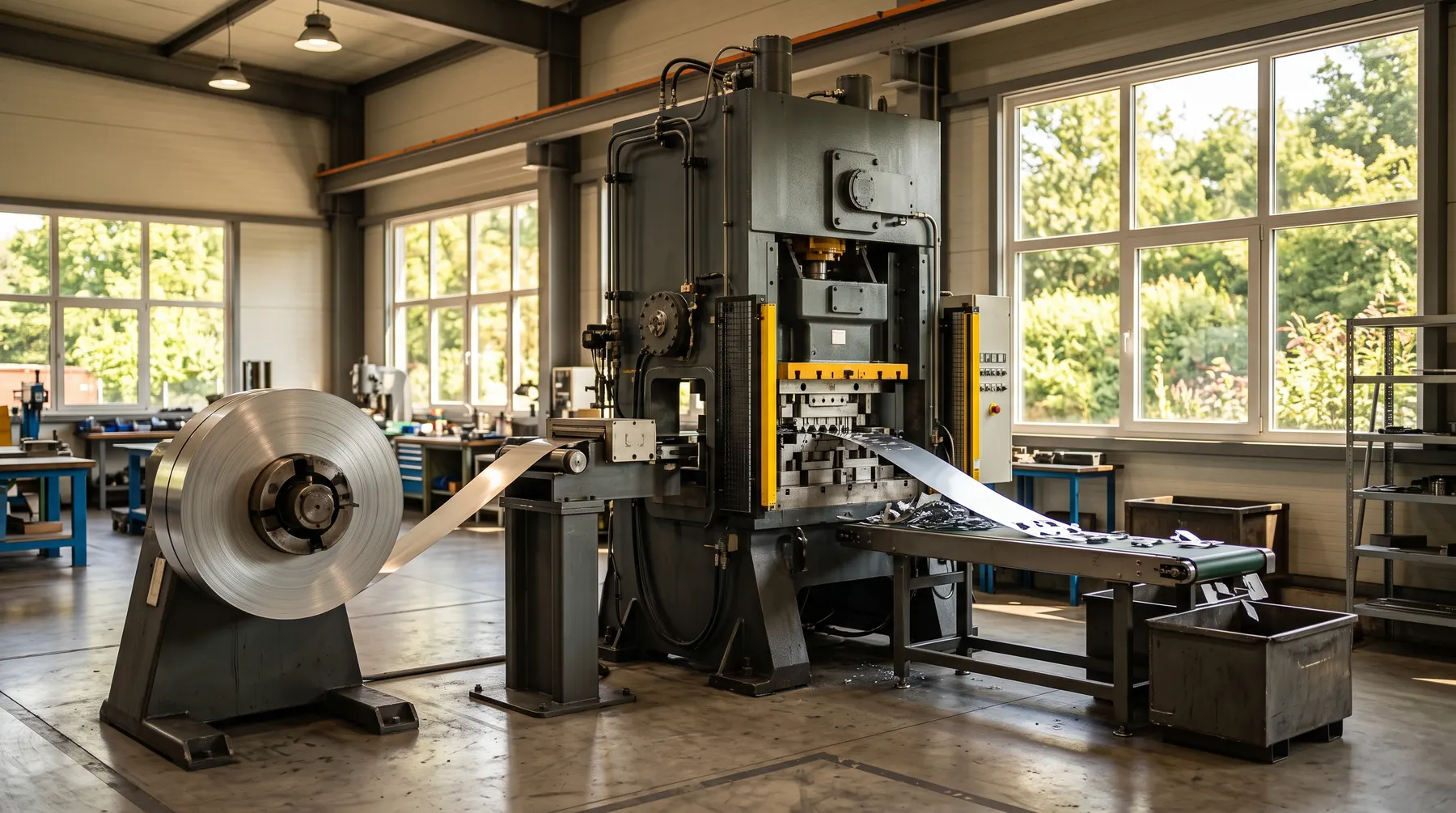
Precision metal stamping processes and die configurations
Sheet metal stamping transforms coiled metal strip into finished three-dimensional mechanical components through blanking, piercing, bending, forming, and coining. For European industrial buyers, stamping delivers tight dimensional repeatability, high structural rigidity, and low unit costs compared with CNC sheet metal milling.
Our toolroom builds stamping dies in house, allowing us to support both low-volume batches with economical single step tooling and ongoing production runs with multi-station progressive dies. Combining stamping with plastic molding eliminates the logistical complexity of sourcing stamped inserts from external vendors.
Stamping die tooling comparison: Progressive vs single step vs compound tooling
| Die tooling type | Tooling fabrication cost | Cycle throughput | Setup requirements | Optimal production volume |
|---|---|---|---|---|
| Single step blanking/forming | Lowest initial tooling investment | Manual or pneumatic transfer between presses | Simple setup and rapid tooling adjustment | Five hundred to five thousand parts |
| Compound stamping dies | Moderate tooling cost | Performs blanking and piercing in one stroke | Precise die alignment required | Two thousand to twenty thousand parts |
| Progressive multi-station dies | Higher investment in hardened tool steel | High speed continuous coil feeding | Careful strip progression alignment | Twenty thousand to hundreds of thousands |
| Deep drawing tooling | Specialized tooling with draw radii | Controlled drawing pressure and lubrication | Critical clearance between punch and die | Enclosures, cups, and seamless housings |

Raw material selections and secondary finishing treatments
We stamp components from a wide selection of commercial alloys including cold rolled carbon steels (such as SPCC and SECC), stainless steel grades (SUS301, SUS304, SUS316), brass, phosphor bronze, and aluminium strip.
Secondary post-stamping operations performed in house or through certified partners include vibratory deburring, precision tapping, spot welding, and surface plating such as electro-tin, nickel, zinc, and silver plating for electrical conductivity and corrosion resistance.
Every production consignment can be accompanied by mill material test certificates verifying tensile yield strength, alloy chemistry, and hardness specifications.
Integrating stamped inserts into plastic molding operations
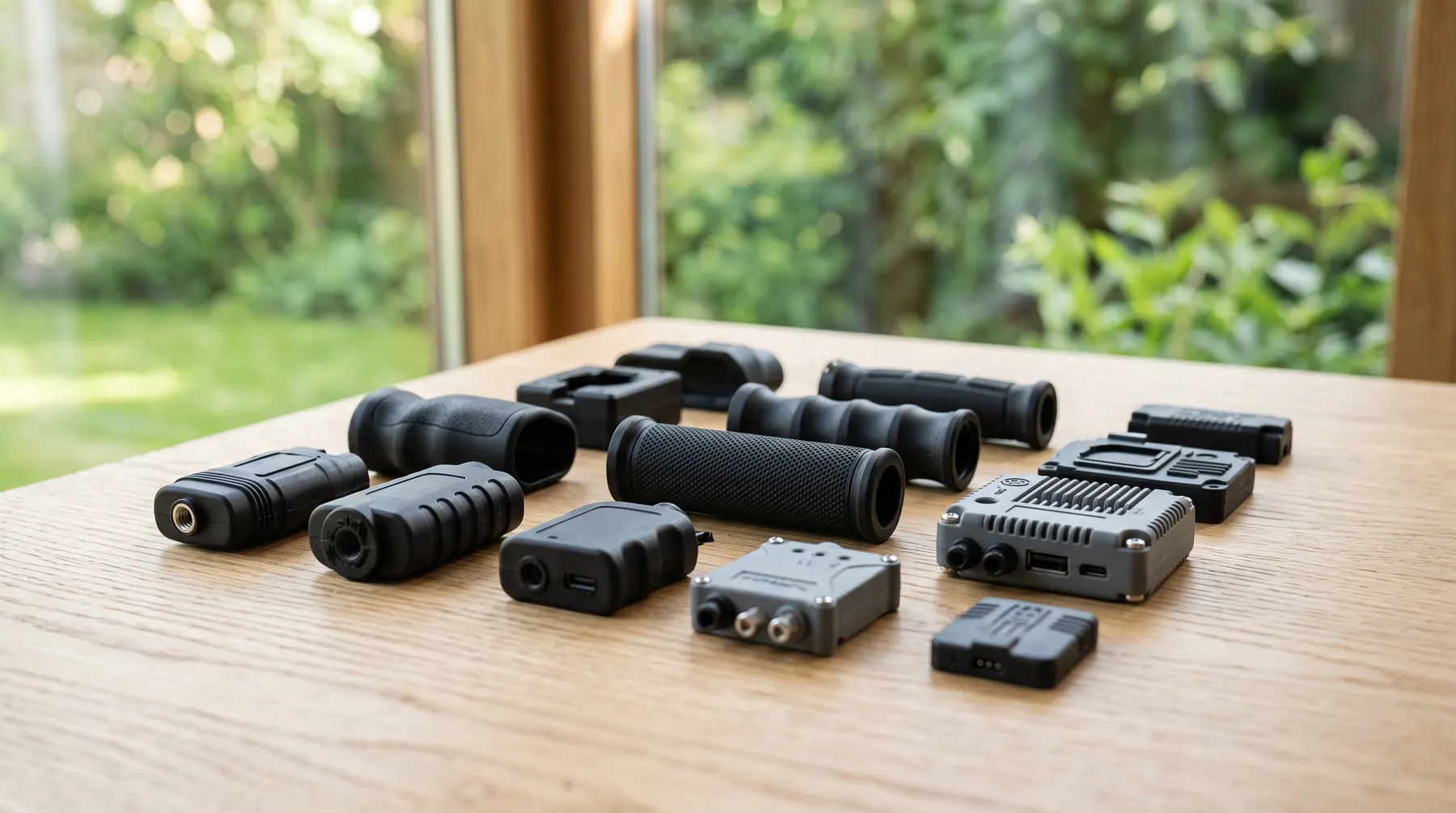
A primary technical advantage of our workshop is the direct integration between stamping dies and plastic injection molds. Electrical connectors, sensor housings, and hand tools frequently require stamped metal conductive terminals encapsulated within plastic bodies.
By fabricating both the stamping die and the injection mold in our Ninghai facility, our engineers ensure that blanking tolerances, burr direction, and locating hole positions match the locating pins in the mold cavity with zero dimensional mismatch.

European compliance, CBAM rules, and quality verification
Importing metal components into the European Union requires awareness of environmental and trade regulations. Plated metal parts must comply with EU RoHS directive 2011/65/EU and REACH regulation (EC) 1907/2006, ensuring absence of restricted heavy metals including hexavalent chromium and lead.
For iron, steel, and aluminium goods, European importers should verify whether their product CN codes fall within Carbon Border Adjustment Mechanism (CBAM) scope. While small consignments under fifty tonnes per year qualify for simplified procedures, verified mill documentation ensures smooth customs clearance at European entry ports.
Recommended technical pages
Related manufacturing processes and guides
Explore engineering documentation, process limits, and material guidelines.
Overmolding and inserts
Molding elastomeric grips and plastic housings directly over stamped metal inserts.
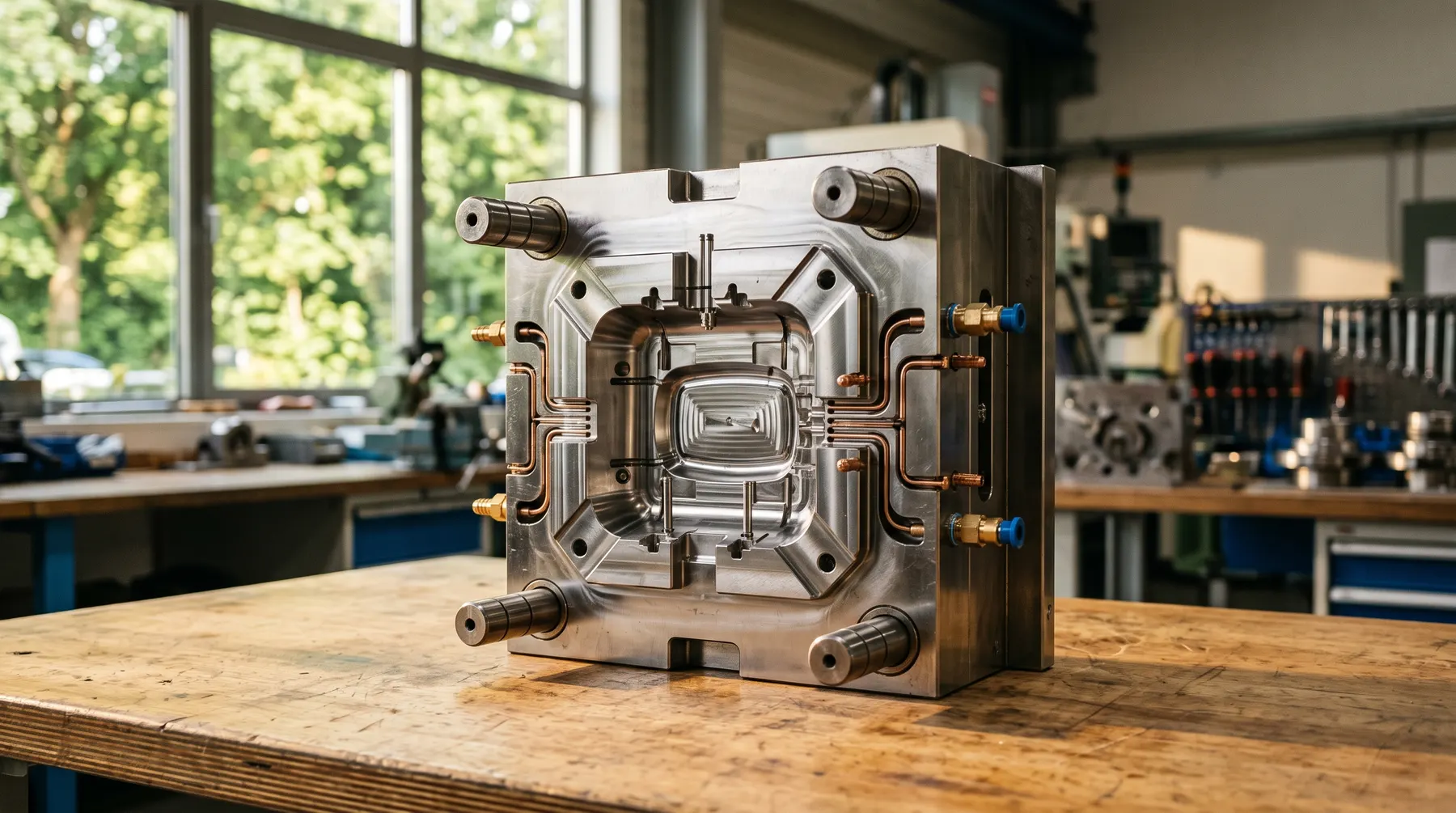
In-house tooling
Machining stamping dies and injection molds under one roof in Ninghai.

EU compliance guide
Incoterms, RoHS, REACH, customs duties, and ocean freight logistics from Ningbo.
Frequently asked questions
Direct technical answers on processes, tooling, standards and commercial terms.
What is progressive die stamping and when is it recommended?
In a progressive die, metal strip feeds continuously through multiple sequential stations. Each station punches, forms, or coins features until the finished part is cut free at the final station. Progressive tooling is recommended when part volumes exceed twenty thousand units annually.
When is metal stamping more cost effective than CNC sheet metal fabrication?
Stamping requires initial tooling expenditure, but achieves cycle times measured in seconds rather than minutes. Once production volumes exceed several hundred components, stamping offers substantially lower unit prices and superior dimensional repeatability.
Which metal alloys does your facility routinely stamp?
We routinely stamp cold rolled steel, galvanized steel, stainless steel grades 301, 304, and 316, brass, phosphor bronze for spring contacts, and various aluminium alloys from 0.2 mm to 3.5 mm thickness.
Does the EU Carbon Border Adjustment Mechanism (CBAM) apply to stamped components?
CBAM applies to specified iron, steel, and aluminium goods entering the EU under designated CN codes. Importers importing less than fifty tonnes of covered goods annually benefit from specific reporting exemptions, but verifying classification is recommended.
What documentation is provided to verify material traceability?
We supply original mill test certificates detailing chemical composition and mechanical properties, alongside RoHS and REACH conformity declarations for base metals and applied surface electroplating.
Request a stamped part proposal
Send part drawings, alloy specifications, annual estimated volumes, and plating requirements. Our team calculates die costs and part unit pricing.